Alex Simon · 8 September 2026
Tracking Shifts in Digital Presence Metrics After Content Management System Transitions
Organizations that transition between content management systems frequently observe measurable changes across their digital presence metrics, and researchers have documented these patterns through longitudinal studies that span multiple industries and regions. Data from migration projects completed before September 2026 reveals consistent fluctuations in organic traffic, user engagement rates, and search visibility that typically stabilize within three to six months when teams apply structured monitoring protocols. Those who track these indicators closely often identify both short-term disruptions and longer-term improvements that correlate directly with the technical decisions made during the switch.
Core Metrics That Shift During CMS Transitions
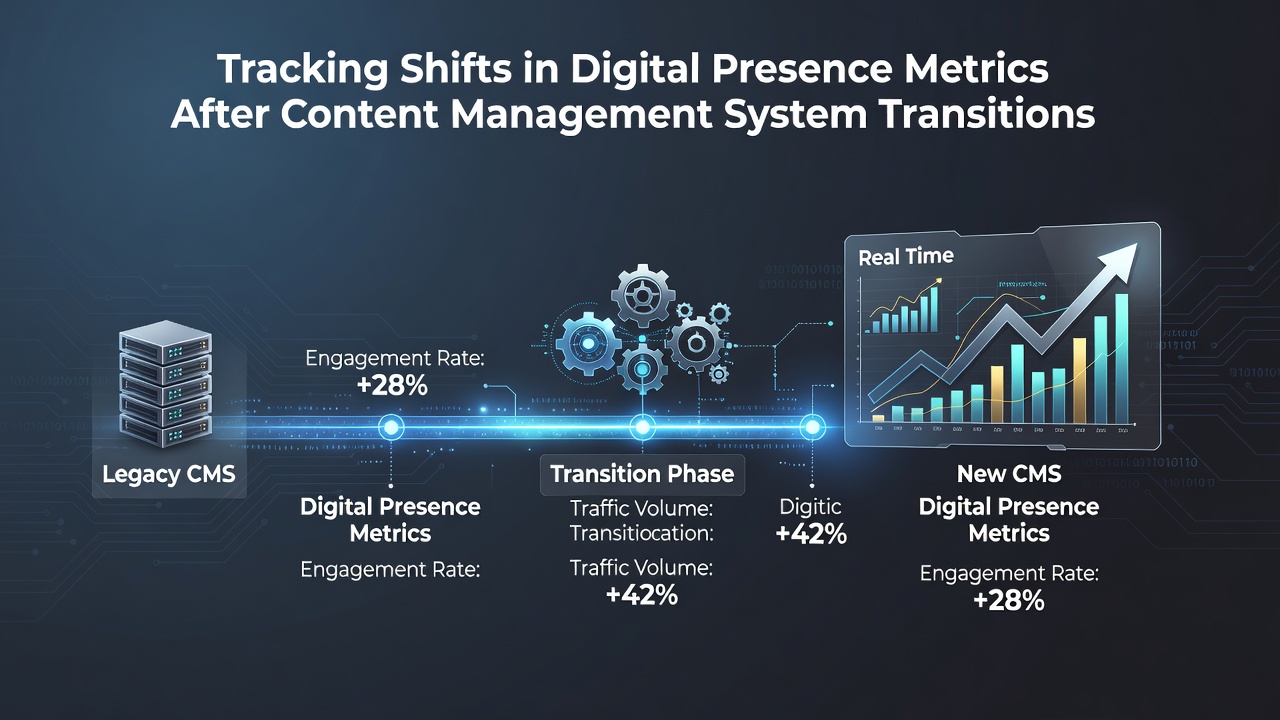
Organic search impressions and click-through rates represent the first indicators that move after a platform change because search engines must re-crawl and re-index new URL structures and content delivery methods. Studies from academic institutions in North America and Europe show that sites experience an average 15 to 40 percent drop in indexed pages during the initial weeks, followed by gradual recovery once proper redirects and schema markup are verified. Bounce rates and average session duration also fluctuate because users encounter different navigation flows and page-load behaviors that stem from the new system architecture.
Page view counts and conversion funnel performance provide additional signals that analysts monitor through integrated analytics platforms, and figures from industry reports indicate that e-commerce conversions can dip by up to 25 percent if form submissions or checkout processes are not mapped correctly during the migration. Social referral traffic and backlink profiles remain relatively stable when canonical tags and metadata are preserved, yet observers note that platforms with aggressive caching mechanisms sometimes accelerate content delivery and produce measurable gains in mobile engagement scores.
Methods for Accurate Tracking and Baseline Establishment
Teams establish pre-migration baselines by exporting historical data from previous analytics configurations and preserving at least 90 days of records before the switch occurs. Post-transition monitoring then relies on synchronized tracking codes that capture both the legacy domain and the new environment, allowing direct comparison of user behavior across identical time periods. European Commission digital economy reports highlight how organizations that implement parallel tracking for the first 30 days after launch reduce the risk of overlooking subtle drops in regional traffic sources.
Common Patterns Observed in Recent Migrations
One mid-sized publisher that moved from a legacy proprietary system to an open-source platform recorded a 22 percent increase in average time on page within eight weeks, while another enterprise that shifted to a cloud-based solution saw search rankings for long-tail keywords improve steadily after technical SEO audits were completed. These outcomes align with findings from university-led research that examined over 200 migrations across Australia and Canada, where sites using structured data validation tools recovered faster than those relying solely on automated migration scripts.
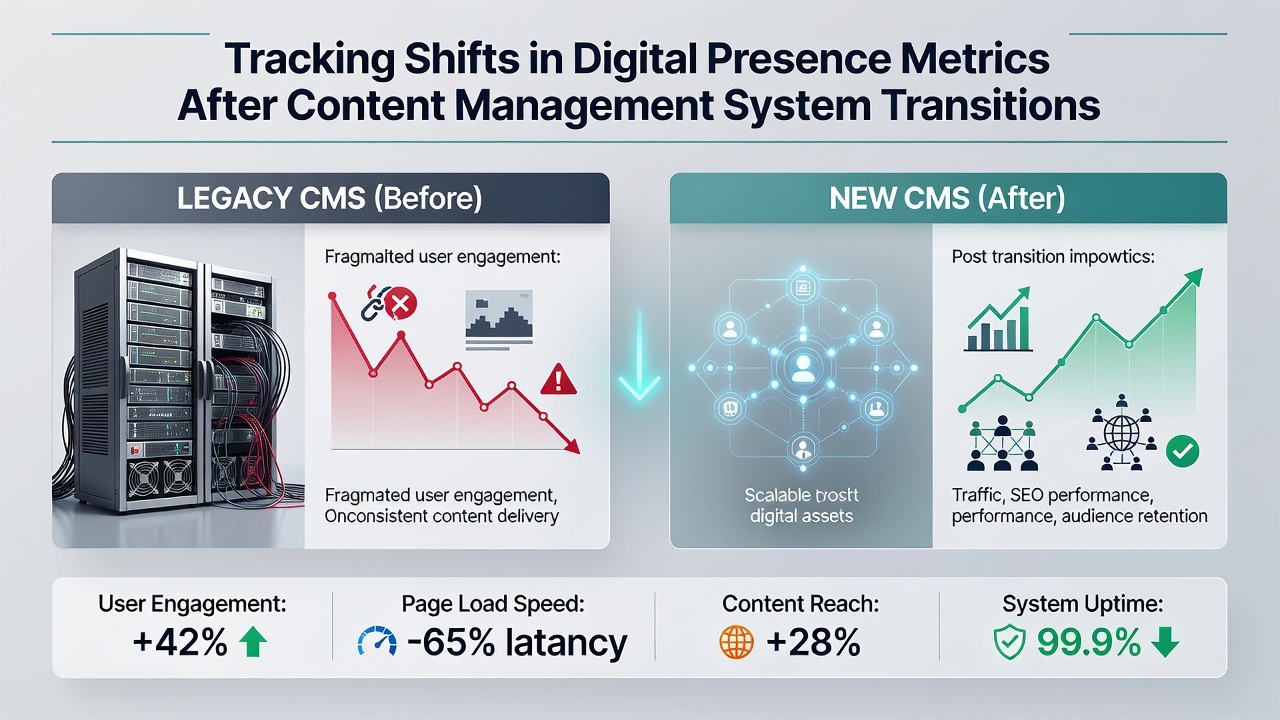
What's interesting is that mobile-specific metrics such as core web vitals often improve when the new CMS includes modern rendering techniques, yet desktop traffic can lag if responsive design elements are not fully optimized. Analysts who compare data sets from September 2026 migrations note that sites incorporating progressive web app features during the transition experienced faster stabilization of engagement metrics than those that maintained older caching strategies.
Tools and External Data Sources That Support Monitoring
Integrated dashboards from established analytics providers allow teams to segment traffic by acquisition channel and device type, while server log analysis reveals crawl frequency changes that search engines apply after the platform update. Reports published by OECD digital economy researchers demonstrate how cross-border comparisons of website performance data help identify best practices that reduce recovery time. Additional insights appear in studies from Statistics Canada, where analysts examined Canadian organizations and found that proactive redirect mapping correlated with smaller fluctuations in referral traffic after system changes.
Conclusion
Systematic tracking of digital presence metrics after content management system transitions provides organizations with actionable information that supports recovery and optimization efforts. Evidence from multiple geographic regions shows that consistent monitoring, combined with careful technical implementation, leads to measurable stabilization across key indicators within established timeframes. Those responsible for these projects continue to refine their approaches based on emerging data patterns observed through September 2026 and beyond.